Tampilkan postingan dengan label Movie of the week. Tampilkan semua postingan

Jumat, 02 Maret 2012

Film review: The Empire Strikes Back (1980)


Contains spoilers. Empire is one of those classic sci-fi films that has no boring moments, is so well-balanced, introducing new characters such as Yoda, and having enough action to please action fans, and enough romance, spiritualty and philosophy to please those interested in something a little deeper.


George Lucas:
“The first three films were done in a thirties style in terms of aesthetic and acting. The snappy comebacks are out of The Thin Man; it wasn't that contemporary. I wasn't just using the Saturday matinee serial but all of the B-films-not the A-films.”


The film is set three years after Star Wars (1977). Many have claimed that Empire has superior characterization, and better performances, and is the best Star wars film. The script serves not only a young audience, but also an adult one. Perhaps in a psychological sense Luke as a son has to sleigh his father to become a man.


In the documentary, The People Vs. George Lucas (2010), they discuss how George Lucas’ career is like the rise and fall of Anakin Skywalker aka Darth Vader. Particularly the first film seems autobiographical. Luke Skywalker being the lonely adolescent kid who yearns to get out and explore. Perhaps George Lucas has had that nightmare of going into the tree where he sees a version of himself turn into Vader. For a lot of geeks, George Lucas did become the version of that guy in the tree that is in Vader's mask.

Lucas:
“I was sort of fighting the corporate system, which I didn’t like, and I’m not happy with the fact that corporations have taken over the film industry, but I found myself being the head of a corporation, so there is a certain irony there, I have become the very thing I was trying to avoid, that is Darth Vader, he becomes the very thing he is trying to protect himself against”


Most crucially, Luke must accept and redeem his own shadow self, himself when he is at his worst. In this case, that shadow is the father, both as what made us and what we fear to become: in this case, Darth Vader ("Dark Father"). Evil and guilt are inescapable in all of us, and we have to acknowledge that. Luke realizes he is part of a family and he mustn’t carry on the sins of his father.

George Lucas:
"What these films (episode 4-6) deal with is that we all have good and evil inside of us, and that we can choose which way we want the balance to go. Star wars is made up of many themes, it's not just a single theme. One is our relationship to machines, which is fearful, but also benign, they are an extension of the human, not mean in themselves. The issue of friendship, your obligation to your fellow man, to other people who are around you. That you have control over your destiny, that you HAVE a destiny, that you have many paths to walk down, and you may have a great destiny if you decide not to walk down that path. Your life might be satisfying, if you wake up and listen to your inner feelings and realize what it is you have a particular talent for and what contributions you can make to society."

What the force is was never really explained (until the prequels came along). For me, the force was always just about believing in yourself, being able to do more than we initially thought possible, and was only something superhuman in the context of the films.

George Lucas on the force:
"I put the force into the movies in order to try to awaken a certain kind of spirituality in young people. More a belief in God than in any particular religious system. (…) I think there is a God, no question. What we know about that God, or what that God is, I'm not sure"

In the making of Star Wars, George Lucas talks about the force:
“It’s sort of boiling down religion to a very basic concept. The idea that there is some power, or force that controls are destiny. Or works for good, and also works for evil, has always been very basic in mankind”

George Lucas on star wars as part of religion and mythology:
"if it’s a tool that can be used to make old stories be new, and relate to young people, that's what the whole point was"


So why was the Star Wars trilogy so special, that 20 years later it could be re-released and still be a box office attraction?

George Lucas, creator, writer and occasional director of the series, has the answer:
“Special effects don’t make a movie (…) The story makes the movie, and all the special effects do is allow you to tell a particular story”

The fact that so little was changed for the special edition 20th anniversary edition stands as a testimony to the quality of The Empire Strikes Back.


G. Lucas on why the Star Wars films appeal to audiences all over the world:
"One of the main themes in the films is having organisms realize that they must live together, and they must live together for mutual advantage, not just humans, but all living things. Everything in the galaxy is part of a greater whole."


The Star Wars trilogy was an attempt to bring back hope to a nation when it seemed in short supply in 1977. Lucas' vision was to resurrect the myths and legends that had once defined society but had since been forgotten because people had more pressing social problems to deal with: the economy was at an all-time low, the Vietnam War had just finished with no clear victor, and Watergate caused scandal within a government that had already lost public confidence. America was in definite need of a cultural tonic that would inspire people and speak to their concerns and at the same time offer some timeless wisdom.


According to Dale Pollock, author of a biography on G Lucas, the film's return to family entertainment and traditional morality was a conscious decision by its writer-director.
“Lucas wanted to present positive values to the audience. In the 1970s traditional religion was out of fashion and the family structure was disintegrating. There was no moral anchor. Lucas remembered how protected he had felt growing up in the cocoon like culture of the 1950s, a feeling he wanted to communicate in Star Wars.”

Pollock lists the values of the film as:
"Hard work, self-sacrifice, friendship, loyalty, and a commitment to a higher purpose."

Lucas himself comments,
"I mean, there's a reason this film is so popular. It's not that I'm giving out propaganda nobody wants to hear."


What George Lucas has done in Star Wars is to communicate that the younger self resides somewhere inside even the oldest person. Star Wars advocates a return to heroism and traditional morality. Those who criticize the Star Wars merchandise sometimes don’t realize that it was, and still is, supply and demand.

Star Wars fanboy and director Kevin Smith has during his film career shared his opinions about the Star Wars trilogy. For example a clip in his film Clerks (1994), the death star is discussed, they wonder what happens to all the innocent contractors who are rebuilding it?

I’ll skip reviewing Return of the Jedi (1983), it has its moments of originality, the speeder bike chases in the forest, the ewoks are cute, but the story of the death star and battling the empire is essentially repeating Star Wars (1977). I won’t review the prequels (1999-2005) either, because to me they focused more on special effects than story.

My rating 8.0


Readers, was my review useful? Any thoughts on The Empire Strikes Back ?

Did you miss last week's review of Star Wars (1977) ? Here's a link.


Sources:
IMDB
Rottentomatoes

The Genius of the System / Gavin Smith / Film Comment 38.4 (July-August 2002): p31-32

Creating and Comparing Myth in Twentieth-Century Science Fiction: Star Trek and Star Wars / Lincoln Geraghty / Literature Film Quarterly 33.3 (2005): p191-200

Whose Future? Star Wars, Alien, and Blade Runner / Peter Lev / Literature Film Quarterly 26.1 (1998): p30-37.

The People Vs. George Lucas (2010)
Clerks (1994)
History Channel - Star Wars the legacy revealed (2007)
The Mythology of Star Wars documentary (2000)
GEORGE LUCAS - HEROES, MYTHS & MAGIC - AMERICAN MASTERS (1993)
Star Wars MTV Movie Special (1997)
Film Review Special - Star Wars 20th Anniversary
Empire of Dreams - The Story of the Star Wars Trilogy (2004) (the least interesting of the docs I watched)

Jumat, 24 Februari 2012

Film review: Stars Wars (1977)


Spoilers may occur
If ever there was a nostalgic movie, Stars Wars is right up there. I actually didn’t discover Lucas’ trilogy (1977-1983) until I was in my teens. All three films are original, and bring something new to the table. It’s tough for me to pick a favorite, though The Empire Strikes Back (1980) is often referred to as the jewel. When shooting began on the first film in 1976, many figured the project to be a sci-fi flop. Crew members stood around laughing at a man in a dog suit (Chewbacca). Within two months of its May 1977 US opening, the film had recouped its $9 million budget, and would go on to surpass the previous record holder Jaws (1975) for most successful film ever at the box office.


The story of Star Wars (1977) is simple, and works because it’s so entertaining and inspiring. As opposed to the prequels (1999-2005), the original trilogy (1977-1983) has well-defined and memorable characters.

Star Wars (1977) is a coming of age saga. Luke Skywalker (Mark Hamill) starts out as the everyman, he has the same insecurities and fears as we do. He is the apprentice, living with his foster parents. Through chance (or destiny) he meets Obi-Wan Kenobi, who becomes his mentor. Luke is restless and eager for adventure. Much like for example the Tintin character, the adventures Luke goes on are probably more interesting than his personality. He is the blank sheet who is taking in knowledge and experience.

Director George Lucas:
"He (Luke) has the talent, he just has to recognize the talent in himself, and then he has to work very hard to nourish that talent, in order to be able to use it in the real world. That is one of the central issues"

George Lucas on why it's so important to listen to your inner feelings:
”It's an issue of quieting your mind, so you can listen to yourself (...) follow your bliss. It's to follow your talent, is one way to put it. That's the way I see it. The hardest thing to do when you're young is to figure out what you’re going to do."


My favorite character is cynical smuggler Han Solo (below, left) played by Harrison Ford. The humor of the character is basically the blue print for Indiana Jones. Solo’s roguish cockiness is the perfect foil for Princess Leia’s aloof protests of disinterest. Han Solo is essentially a selfish character, his name solo speaks of his independent nature. During the story he learns to commit himself to a cause outside of himself, and care about other people. To think of someone other than yourself is a lesson we can all learn from. Han Solo is a thief with a heart of gold. Harrison Ford is also the only member of the cast to go on to have a string of hit films outside of Star Wars.


Famously remembered for her haircut! Princess Leia (Carrie Fisher) is the damsel in distress, but she is not just a passive pretty face to be rescued, she is a woman of action and is not afraid to speak her opinion. As a leader of the rebellion, Leia needed to project a confidence beyond her years.


Alec Guinness memorably plays retired Jedi knight Obi-Wan Kenobi, a blend of the wizard Merlin and a samurai soldier. Guinness was picked to play the mentor of Luke because he had a certain screen presence as a well-known character actor.

George Lucas:
"What Luke is doing in the beginning of Star wars is finding his own responsibility, his place in the world (…) Obi-Wan sends him on the path of self-discovery"


During the opening moments of Star Wars, no one made more of an impression than Darth Vader (David Prowse). Standing two meters tall and dressed in black body armor and a flowing cape, Vader was an instantly recognizable symbol of evil, whose power, incredible confidence, ruthlessness, and faceless mystery struck terror into the hearts of cinemagoers around the world. However, his voice (by James Earl Jones) and breathing are part of what made the character so haunting and effective.

George Lucas about the popularity of Darth Vader:
"Children love power, because children are the powerless. So their fantasies all center on having power, and who is more powerful than Darth Vader"


An inspiration for Star Wars was the filmmaker Kurosawa.
Lucas:
“I admired Hidden Fortress. I was inspired by a device Kurosawa used in Hidden Fortress that I liked very much, which I used in Star Wars, which was to take the two most insignificant characters and tell the story from their point of view. In this case, it’s R2 and 3PO.”


With so much emotion and tension, C3PO (Anthony Daniels) and R2D2 (Kenny Baker) provide slapstick and release. They are the comedy team of the thin guy and the fat guy, only they happen to be robots. C3PO and R2D2 are a little beside the action looking at it, so they are with us the audience on the journey. C3PO is the bumbling sidekick and seems more like us, what would we do in that situation? We'd probably panic and that’s what C3PO does.


George Lucas was influenced by stories he knew as a child, Flash Gordon, Buck Rogers. Later on Lucas read the nonfiction book The Hero With A Thousand Faces (1949), by famed mythological professor Joseph Campbell, which was used on college campuses across the US. In the book, Campbell said myth is the metaphor for the experience of life. Campbell was interested in the threads that tied all the mythologies together.

The mythological process is that everyone sees themselves in the story. The light saber could be a reference to King Arthur and the Excalibur sword, the death star could make us remember the Greek tale of Odysseus entering the underworld.
Mythic stories were originally designed as cautionary tales, they are stories that instruct us how we should conduct ourselves. Myths emerge out of religion, and are a way to make sense of the universe.


The empire depicted in Star Wars is sterile and lifeless, there are no women anywhere. Hitler’s personal bodyguards where called stormtroppers, just like the anonymous white stormtroppers in Lucas’ film. The mask represents someone who has lost their humanity, so they are just going to do what they are told, but not necessarily what’s right. Darth Vader’s helmet look like the helmets worn by German soldier’s during WW2. The empire represents a system, a faceless power that is threatening to squelch us all.
You can perceive the Star Wars mythology as a metaphor for our culture as the machine. Is the state going to crush humanity, or is it going to serve humanity.

Joseph Campbell, the author Lucas had read, thought that the big question of our time was would we live for the machine, or would we live for humanity. In Star Wars, the technology is symbolic of the loss of humanity, Darth Vader’s robot body, the imperial walkers, or the death star, which looks like a planet, but is a machine. Inside of the death star the construction is empty, and an interpretation is that the heart of the evil Empire is hollow.
The message could be, don’t rely on technology, rely on yourself, that one person can make a difference, and the importance of friendship. It’s how people use technology which defines them as good or bad. We are all in this together, and we need to cooperate to survive.

Film critic Roger Ebert: “George Lucas' space epic has colonized our imaginations, and it is hard to stand back and see it simply as a motion picture, because it has so completely become part of our memories. (...) Star Wars effectively brought to an end the golden era of early-1970s personal filmmaking and focused the industry on big-budget special-effects blockbusters, blasting off a trend we are still living through. “


Ground breaking special effects, new worlds, vehicles and props caught the imagination of audiences, such as the spacecraft Millennium Falcon, light sabers, and memorably introducing us to “the force”. Lucas and producer Kurtz surrounded themselves with the best special effects experts in their field. They would be called upon to be inventive and highly innovative. To emphasize just what a valuable contribution they made to Star Wars, its subsequent seven Oscar wins were for Best Art direction/Set Direction, Best Visual Effects, Best Costume Design, Best Film editing, Best Sound Effects, and Best Original Score written by John Williams. Director George Lucas was also nominated for best director, but lost out to Woody Allen.

Favorite quotes, uttered by Obi-Wan Kenobi: “May the force be with you, always”, and “Who is the more foolish, the fool, or the fool who follows him”

My rating is 8.0

For further reading, check my review of The Empire Strikes Back (1980)


Readers, any thoughts on my review above? Or Star Wars in general? What is your favorite of the Star Wars films, and why?


Sources:
IMDB
Rottentomatoes
History Channel - Star Wars the legacy revealed (2007)
The Mythology of Star Wars documentary (2000)
GEORGE LUCAS - HEROES, MYTHS & MAGIC - AMERICAN MASTERS (1993)
Star Wars MTV Movie Special (1997)
Film Review Special - Star Wars 20th Anniversary
Empire of Dreams - The Story of the Star Wars Trilogy (2004) (the least interesting of the docs I watched)
Film review, Roger Ebert

Minggu, 19 Februari 2012

Film review: Lost In Translation (2003)


Bob Harris (Bill Murray) and Charlotte (Scarlett Johansson) are two Americans in Tokyo. Bob is a movie star in town to shoot a whiskey commercial, while Charlotte is a young recent graduate, tagging along with her workaholic photographer husband. Unable to sleep, Bob and Charlotte cross paths one night in the luxury hotel bar. Both of them feel trapped and ignored in their respective marriages. The two bond over their shared loneliness and insomnia, developing a close relationship during their short time together. Charlotte and Bob venture through Tokyo, having often hilarious encounters with its citizens.

Has been described as having a dreamy intimacy. Rottentomatoes actually calls it a mood piece. Sofia Coppola explains in an interview on Charlie Rose from 2003, that she spent time in Tokyo in her 20s, and there was nowhere like it, and the city made a great impression on her. She thinks it’s about those brief, memorable encounters in life that are not part of your ordinary life.

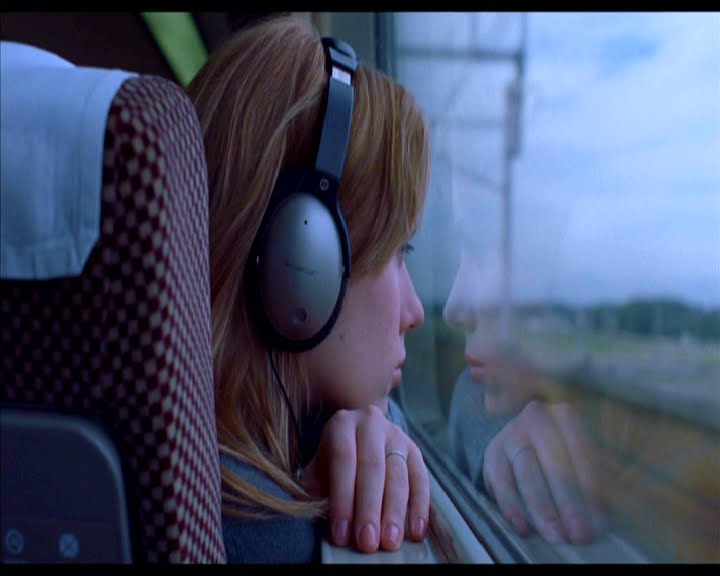
Lost In Translation is all about the feeling it gives me, dreamlike and atmospheric, with hazy music. The lighter scenes help shape the story into something memorable, as in real life we remember the funny, stand-out moments during our vacation. The soundtrack is one of my favorites of all time, and could be the reason I got interested in dream pop. You might think there would be more Asian music, there is surprisingly very little. Initially, I thought the plot was a little thin, on subsequent viewings and after reading more about the filmmaker’s intentions, I have grown to love it. In fact, for me, Lost In Translation is the most atmospheric film of the 2000s (that I have seen). The pensive moments say so much without any dialogue needed. A visual style all of its own, that you don’t see every day. Visually arresting, and that's often not true for indie movies with a limited budget and limited shooting schedule. Lost in Translation is a beautiful love letter to Japan.


Bob (Bill Murray) and Charlotte (Scarlett Johansson) embark on a mutual experience in Tokyo of redefining themselves through a friendship, which transcends age, gender or physical appearance.
Perhaps we are not even seeing the city how it really is, but how the two main characters subjectively perceive it. Bob and Charlotte may already have felt alienated in their own lives due to their marriages, and being homesick in Tokyo just enhances this feeling of not belonging and feeling lost. The Charlotte character poses the kind of questions that you ask yourself when you’re young. Everybody knows what they’re doing, and who am I?


The title of the movie is a reference to a definition of poetry by American poet Robert Frost: "Poetry is what gets lost in translation". The concept of "lost in translation" occurs throughout the film with a number of meanings. For example, filming the Suntory whisky commercial, a director speaks several long sentences, followed by a brief, inadequate translation from the interpreter.


Will appeal to anyone who has felt out of place, confused, or alienated in a foreign country. A very stylish and modern film that many travelers no doubt will identify with. The story is about how long-distance travel affects you, how you deal with being in a foreign environment. Everything feels unnatural for Bob and Charlotte, so it feels safe to be in the company of someone from your own native country.

I think the message is, that maybe you will never discover what the meaning of life is, and why you are on this earth, but then it’s good to at least share this feeling with someone, comfort one another, and know you are not alone with these feelings. Film critic Roger Ebert describes the film in his review: "Lost in Translation, which is sweet and sad at the same time, it is sardonic and funny. (…) Funny, how your spouse doesn't understand the bittersweet transience of life as well as a stranger encountered in a hotel bar. (…)They share something as personal as their feelings rather than something as generic as their genitals.”

The film was also criticized, according to one reviewer: the Japanese are not afforded a shred of dignity. The viewer is sledgehammered into laughing at these small, yellow people and their funny ways.


Refreshing we get to see a friendship which is not sexual, but is built on a deeper understanding. Some have compared the story and visual style of the film to the Hong Kong film In The Mood For Love (2000), which also features platonic love, where a man and a woman don’t get involved sexually, because they don’t want to end up like their husband and wife, and the couple are in a way isolated from the outside world by only having each other. If you remember, Sofia Coppola thanked director Wong Kar Wei at the Oscars in her acceptance speech, when she won for best screenplay.


I wouldn’t call the relationship a romance, for me it’s more about a friendship. Niels85 argues it’s a romantic film: “there is no doubt in my mind that they were in love, they just never acted upon it because, deep inside, they respected each other too much and they knew that it would never work in the long run. Both were married and even if both relationships are failing, they are still trying to make them work. This is just part of the internal conflict inside of Scarlett and Bill Murray that was so interesting to watch. Even if you do think it was a friendship, at the end of the day they kissed, quite desperately, and you can argue there’s no purer love that the one between true friends.”

The director was asked in an interview for Screenwriter's Monthly, is this movie a romance? Sofia Coppola: “Well, I think it’s romantic in feeling. It’s not really a romance. It’s, I guess, more of a friendship. But I like those kind of relationships that are sort of in between and that you do have these memorable relations with people that don’t ever become a real thing.”

On Charlie Rose in 2003, Scarlett Johansson talks about her character Charlotte, “She needs him (Bob Harris), to help her get through her midlife crisis as a 24-year-old. (…) She is going through the same thing (as Bob), and it kind of inspires her to move away from it.”

Lost In Translation won an Oscar for Best Original Screenplay in 2003. It was also nominated for Best Director and Best Picture, but lost both to The Lord of the Rings: The Return of the King.

Bill Murray was also nominated for Best Actor, but lost to Sean Penn. I don’t know if Bill Murray should have won the Oscar, he is funny, but just playing himself again, I think.

My rating is 8.5/10

Have you seen the film yet? Let me know what you think of Lost In Translation in the comment box below!


IMDB

Rottentomatoes

Charlie Rose, conversation with Sofia Coppola (2003)

Charlie Rose, conversation with Scarlett Johansson (2003)

Film review, Roger Ebert

Film review, filmforager

Mini review, Niels85

An interview with Sofia Coppola, for Screenwriter's Monthly