Tampilkan postingan dengan label independent movies. Tampilkan semua postingan
Minggu, 19 Februari 2012
Film review: Lost In Translation (2003)
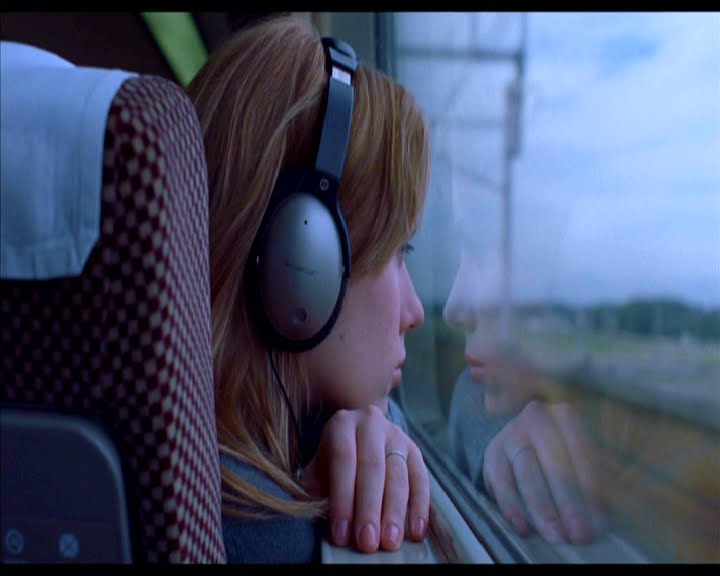
Bob Harris (Bill Murray) and Charlotte (Scarlett Johansson) are two Americans in Tokyo. Bob is a movie star in town to shoot a whiskey commercial, while Charlotte is a young recent graduate, tagging along with her workaholic photographer husband. Unable to sleep, Bob and Charlotte cross paths one night in the luxury hotel bar. Both of them feel trapped and ignored in their respective marriages. The two bond over their shared loneliness and insomnia, developing a close relationship during their short time together. Charlotte and Bob venture through Tokyo, having often hilarious encounters with its citizens.
Has been described as having a dreamy intimacy. Rottentomatoes actually calls it a mood piece. Sofia Coppola explains in an interview on Charlie Rose from 2003, that she spent time in Tokyo in her 20s, and there was nowhere like it, and the city made a great impression on her. She thinks it’s about those brief, memorable encounters in life that are not part of your ordinary life.
Lost In Translation is all about the feeling it gives me, dreamlike and atmospheric, with hazy music. The lighter scenes help shape the story into something memorable, as in real life we remember the funny, stand-out moments during our vacation. The soundtrack is one of my favorites of all time, and could be the reason I got interested in dream pop. You might think there would be more Asian music, there is surprisingly very little. Initially, I thought the plot was a little thin, on subsequent viewings and after reading more about the filmmaker’s intentions, I have grown to love it. In fact, for me, Lost In Translation is the most atmospheric film of the 2000s (that I have seen). The pensive moments say so much without any dialogue needed. A visual style all of its own, that you don’t see every day. Visually arresting, and that's often not true for indie movies with a limited budget and limited shooting schedule. Lost in Translation is a beautiful love letter to Japan.
Bob (Bill Murray) and Charlotte (Scarlett Johansson) embark on a mutual experience in Tokyo of redefining themselves through a friendship, which transcends age, gender or physical appearance.
Perhaps we are not even seeing the city how it really is, but how the two main characters subjectively perceive it. Bob and Charlotte may already have felt alienated in their own lives due to their marriages, and being homesick in Tokyo just enhances this feeling of not belonging and feeling lost. The Charlotte character poses the kind of questions that you ask yourself when you’re young. Everybody knows what they’re doing, and who am I?
The title of the movie is a reference to a definition of poetry by American poet Robert Frost: "Poetry is what gets lost in translation". The concept of "lost in translation" occurs throughout the film with a number of meanings. For example, filming the Suntory whisky commercial, a director speaks several long sentences, followed by a brief, inadequate translation from the interpreter.
Will appeal to anyone who has felt out of place, confused, or alienated in a foreign country. A very stylish and modern film that many travelers no doubt will identify with. The story is about how long-distance travel affects you, how you deal with being in a foreign environment. Everything feels unnatural for Bob and Charlotte, so it feels safe to be in the company of someone from your own native country.
I think the message is, that maybe you will never discover what the meaning of life is, and why you are on this earth, but then it’s good to at least share this feeling with someone, comfort one another, and know you are not alone with these feelings. Film critic Roger Ebert describes the film in his review: "Lost in Translation, which is sweet and sad at the same time, it is sardonic and funny. (…) Funny, how your spouse doesn't understand the bittersweet transience of life as well as a stranger encountered in a hotel bar. (…)They share something as personal as their feelings rather than something as generic as their genitals.”
The film was also criticized, according to one reviewer: the Japanese are not afforded a shred of dignity. The viewer is sledgehammered into laughing at these small, yellow people and their funny ways.
Refreshing we get to see a friendship which is not sexual, but is built on a deeper understanding. Some have compared the story and visual style of the film to the Hong Kong film In The Mood For Love (2000), which also features platonic love, where a man and a woman don’t get involved sexually, because they don’t want to end up like their husband and wife, and the couple are in a way isolated from the outside world by only having each other. If you remember, Sofia Coppola thanked director Wong Kar Wei at the Oscars in her acceptance speech, when she won for best screenplay.
I wouldn’t call the relationship a romance, for me it’s more about a friendship. Niels85 argues it’s a romantic film: “there is no doubt in my mind that they were in love, they just never acted upon it because, deep inside, they respected each other too much and they knew that it would never work in the long run. Both were married and even if both relationships are failing, they are still trying to make them work. This is just part of the internal conflict inside of Scarlett and Bill Murray that was so interesting to watch. Even if you do think it was a friendship, at the end of the day they kissed, quite desperately, and you can argue there’s no purer love that the one between true friends.”
The director was asked in an interview for Screenwriter's Monthly, is this movie a romance? Sofia Coppola: “Well, I think it’s romantic in feeling. It’s not really a romance. It’s, I guess, more of a friendship. But I like those kind of relationships that are sort of in between and that you do have these memorable relations with people that don’t ever become a real thing.”
On Charlie Rose in 2003, Scarlett Johansson talks about her character Charlotte, “She needs him (Bob Harris), to help her get through her midlife crisis as a 24-year-old. (…) She is going through the same thing (as Bob), and it kind of inspires her to move away from it.”
Lost In Translation won an Oscar for Best Original Screenplay in 2003. It was also nominated for Best Director and Best Picture, but lost both to The Lord of the Rings: The Return of the King.
Bill Murray was also nominated for Best Actor, but lost to Sean Penn. I don’t know if Bill Murray should have won the Oscar, he is funny, but just playing himself again, I think.
My rating is 8.5/10
Have you seen the film yet? Let me know what you think of Lost In Translation in the comment box below!
IMDB
Rottentomatoes
Charlie Rose, conversation with Sofia Coppola (2003)
Charlie Rose, conversation with Scarlett Johansson (2003)
Film review, Roger Ebert
Film review, filmforager
Mini review, Niels85
An interview with Sofia Coppola, for Screenwriter's Monthly
Minggu, 12 Februari 2012
Film review: American Psycho (2000)
Patrick Bateman is a 27-year-old yuppie who works on Wall Street, he is handsome, sophisticated, charming, and intelligent. Everything looks in perfect order from the outside, for example the relationship between him and Evelyn. He should be happy, right? Bateman is also a psychopath. American Psycho is the American dream turned into a nightmare.
It’s easy to misinterpret the story, I don’t think I fully understood Bret Easton Ellis' novel when I read it a few years ago. It’s a satire and black comedy, living in a society obsessed with surface. A critique of male behaviour, a depiction of rampant materialism, and soullessness of 1980s Manhattan. Everything is on the surface, the clothes they wear, the references they use, there is no sense of anything beyond the surface.
In a 1994 interview on Charlie Rose, author Bret Easton Ellis talks about how we obsess about how people appear rather than what we’ve done, he says all his books are a criticism of these values. Ellis believes we are a society who totally live in the surface, we want to believe the surface, and we find truth in the surface. Ellis hopes it isn’t like that, but he believes it is. With American Psycho, Ellis wanted to write with a voice of a serial killer. His characters seem to have no redeeming values, they stand for nothing. Ellis’ books are like a warning on how not to behave. Today the novel itself is just as famous as the fierce debate it started following the release of the book in 1991.
The film from 2000 toned down some of the explicit and controversial violence and sexuality, so as to reach a broader audience. Bret Easton Ellis said on Charlie Rose that he thinks the filmmakers did a good job in clarifying the themes and message of the book, and I think I agree. Ellis thinks it's a misreading of American Psycho, when people focus only on the violence, which Ellis claimed in 2000 on Charlie Rose is just a few sequences of the book. The novel was criticized upon publication for glorifying violence, as well as being degrading and condescending towards women. Bret Easton Ellis' gaze is always steadily fixed on the reader, could it be morbid fascination and blatant attention-seeking? As though asking, "Are you revolted yet? Are you shocked? It has been said that Bret Easton Ellis had chosen repulsive sensationalism as a way of ensuring commercial success. When Ellis talks of how desensitized our culture has become towards violence and how this necessitated the extremes of his novel, he is on to something about our culture. But is debatable, did Ellis go too far? Is it as some critics have claimed a how-to-manual of being a serial killer? Is the author making violence cool? We have no protective goggles when reading about Bateman's seemingly uncensored flow of thoughts.
Actor Christian Bale gives arguably his best ever performance as the lethal yet charming Patrick Bateman. As Bale comments in the dvd featurette, Bateman has "no real sense of self whatsoever, except for that there is a lack of self." Patrick finds pleasure in hurting other people, and he has a humour to match. A monster in a handsome disguise, comparable to the main character in Oscar Wilde’s The Picture of Dorian Gray (1890), a novel Bret Easton Ellis possibly was inspired by. Similar to The Picture of Dorian Gray, American Psycho proclaims that we shouldn't always take what is on the surface at face value. Being attractive on the outside doesn't necessarily equal being attractive on the inside. The relationship between Patrick and Evelyn turns out to be false, perfect on the surface, however they are using each other to always have at least someone to go out with, while simultaneously both having an affair. Ironically, even the woman Bateman is having a fling with he hardly acknowledges either.
Bateman seems dissatisfied with being just another anonymous suit among hundreds of others on Wall Street. The twentysomethings Bateman befriends either can't, or don't want to reveal or admit to any deeper emotions. They carry on rivalries expressed in clothes, offices, salaries, business cards, and being able to get reservations at expensive restaurants. They are not defined by what human qualities they possess.
The author Bret Easton Ellis manages to take his obsession with deindividualization in consumer society to its extreme. Ellis explains in an interview on youtube, that Bateman's way of identifying people is by what they are wearing, and this hints at Bateman's isolation and alienation. In another interview, Bret Easton Ellis talks about the genesis of the novel, Ellis felt very isolated and lonely as a twentysomething author, and the story is about him entering into the world of adulthood, and being incredibly disappointed at what it means to be an adult, and being a culture that bows to all these things that are basically bullshit, and feeling the need to do these things in order to become an adult, and that's how Patrick Bateman began to emerge as a character.
In a way, Bateman's inner self has disappeared from public view, and maybe this is why he needs to let out his anger. Bateman is a victim of the material culture his life is dominated by, but doesn’t seem aware of being a whore to the advertising industry. Appearances and what other people think of their appearance is what they care about among his yuppie friends. Patrick Bateman does recognize that he's numb I think. Unfortunately his idea of standing out involves the ruthless killing of men and women. Although he doesn’t want to take credit for the murders, he knows he will go to jail, so why kill in the first place? This is the central question for me, but there may not be an answer. Is Bateman tired of being part of a materialistic yuppie culture, where young people live in the city, and earn a lot of money that they spend on expensive and fashionable things? If he is so sick of his lifestyle, why doesn’t he just bail out (no pun intended), and try something new? Maybe he is afraid to, or doesn’t know how. Perhaps he was neglected as a child, doesn't understand emotional love, and doesn't know how to receive affection. You wonder if Bateman is so spoilt that he has never felt genuine pain, and therefore doesn't have empathy when witnessing pain in others? Has he become immune to feelings?
Bateman succeeds in looking good, but this doesn't translate to feeling good inside, however many beauty products he consumes. He can fool everyone else that he is young, good-looking and successful, though he can't fool himself.
I'm a fan of the soundtrack which is a who’s who of 80s pop music, Huey Lewis and the News, New Order, Genesis, and so on. The bestseller book goes even further with lots of music references from the era. The dancing scene involving a moonwalk, and Jared Leto sitting on the couch is especially creepy, funny and memorable to me.
Perhaps American Psycho is a critique of horror and porn, which Bateman consumes during the story. Bateman enjoying watching a video tape of The Texas Chainsaw Massacre (1974) one moment. The next he is running around naked, out of control, carrying a chainsaw, and chasing a prostitute. Video becomes a dehumanizing medium in the hands of Bateman. Is Bret Easton Ellis saying these sort of horror films should not be so freely available?
We are forced to identify with Bateman, consumerism has taken over his world to such a degree that he no longer can exist as a normal human being, his excessive use of for instance bathing products clearly is a satire. The question is why is Bateman so materialistic? Is he just copying other people's idea of what is the right way to behave? Is the risk not having his own distinctive personality, besides what he owns and has read in a magazine? What he buys is who he is. We too live in a consumer culture similar to the world depicted. How do we lash out and rebel as consumers? What can we do about it? Are we happy to be force-fed products and advertising every time we go for a walk in the street, or go online? Bret Easton Ellis is clearly critical of the world we live in, which in terms of advertising is similar to the late 80s, so the story is still relevant.
Is Bateman's first person narrative the repressed male aggression we all have in us? So that we can sit on the sideline and live through his uncivilized, no boundaries behaviour? We get to know Bateman, who most people wouldn't want as a friend, but it's definitely an interesting character study of a serial killer. The story questions, is it the world around him that has made Bateman into a monster, or does the monster come from within. In my opinion the author is arguing for the environment is corrupting Bateman's soul, and consumerism is obviously controlling and shaping his behaviour. Not that I'm in a any way defending Bateman's actions, just that it seems Bret Easton Ellis is trying to persuade me to believe the society of 1980s Wall Street is unhealthy. However, serial killers emerge among all walks of life in random spots, not just the big city, and the author and the reader knows this. We are never given a reason why Bateman hates the world, maybe there are many reasons, maybe he is simply a psychopath, as the title indicates, maybe Bateman doesn't even know why he has the urge to kill.
The story is about fitting in, and the importance of trends. You become part of a group by conforming, to not be alone, can take part in conversations with work colleagues, etc. Even the Huey Lewis lyrics Bateman is listening to during the murder scene, are about conforming.
According to Ellis in a youtube interview: "Yeah I get it, the world sucks. The values of society are terrible. We should not conform to them. Yet we have no choice, or else we can't live a life."
The question is, would Bateman rather take part in shallow Wall Street life, and if not what is the alternative? A small hint I think is in my favourite scene from the film, where Bateman visits the cleaners, and a woman tries to reach him, but ultimately Bateman is too far gone and too self-absorbed to notice her kindness. The mirrors which constantly turn up during the film are a reminder of this obsession with oneself.
Roger Ebert thinks its about a personality type, very narcissistic, very greedy, self-centred, who entirely focus on gratifying their own immediate impulses.
In an interview from 1999 on youtube, Ellis says his books "in many ways are about the importance society places on certain things, and on certain people, I think in my earlier books it was really about people who make a lot of money, rich people, and the freedom that money brings them, and the abuse of that freedom, really is what American Psycho (1991) is about, what Less than Zero (1985) is about"
As Sati at Cinematic Corner writes in her review, Bateman has a fiancé, a Wall Street job, and drinking pals he meets at restaurants, because he is supposed to, not because he likes any of them. Bateman wants everyone to envy his perfect body and supposedly perfect life.
It appears that Bateman doesn't care about what happens, and doesn't have any morals or conscience. Though in several scenes he attempts to confess his crimes, but nobody is really listening. His drinking buddys are not real friends, and don't care about his feelings, so in that respect, he does feel guilty and is reaching out for help in a subtle way, even though on another level he doesn't want to get caught. If he merely imagines himself as a vicious psycho killer is ultimately left an open interpretive question. In the story, he has both hallucinations and nightmares, what is real and what is going on only in his mind is blurred.
Hopefully nobody will ever be inspired by Bateman's actions. There is no denying American Psycho condemned a way of life to which many people have sacrificed their youth and energy, that is what the message is about in my opinion. The violence is not the answer for Bateman, but a sign of frustration about the world he is a part of. He should be happy, he has everything. All that is missing is the most important part of the puzzle, real love, and real friendships.
Readers, any thoughts? Let me know in the comments box below!
Sources:
1994 Charlie Rose interview of author Bret Easton Ellis about furor over his book American Psycho.
2000 Charlie Rose conversation with Bret Easton Ellis, director Mary Harron, and star Christian Bale
Youtube interviews of Bret Easton Ellis on American Psycho here, herehere , and here
Video nasties and the monstrous bodies of American Psycho / Martin Rogers / from: Literature-Film Quarterly 39.3 (July 2011)
'I Guess I'm a Pretty Sick Guy': Reconciling Remorse in Thérèse Raquin and American Psycho / Steven Jay Schneider / from: Contemporary Literary Criticism Select (2002)
Review of American Psycho / James Gardner / from: National Review (June 17, 1996)
Roger Ebert, film review
Cinematic Corner, film review
DVD featurette
Selasa, 01 November 2011
Movie of the week: After Hours (1985)

A drama/comedy that takes place in a single night in New York. It’s a very unpredictable story, the beginning doesn’t prepare you for what will happen later. The characters slowly reveal themselves. Originally titled Lies, then A Night in SoHo, the story follows the misfortunes of Paul, a young computer operator, who accepts an invitation from an attractive women he’s met in a diner.
The atmosphere is very unique to me in this film, it’s along with the excellent music almost a character in its own right. The making of calls it “nightmarish” or “surrealistic”. I thought the acting by Rosanna Arquette was poor, though.
There is a high level of suspense in After Hours, which is technically a comedy but plays like a version of the classic Hitchcock plot formula about the innocent man wrongly accused. Film critic Roger Ebert: “The plague of bad luck seems generated by some unexplained divine wrath.”
It was shot entirely at night, sometimes with on-the-spot-improvisation of camera movements. In the making of they explain Tim Burton was going to direct, but because Scorsese’s 'The Last Temptation of Christ' fell apart in early 80s, Scorsese became interested and directed After Hours, and Burton withdrew from the project.
Scorsese has suggested that Paul’s implacable run of bad luck reflected his own frustration during the Last Temptation of Christ experience, where his Jesus film couldn’t get made in the early 80s. Agents promised him a “go”, everything was in place, and then time after time an unexpected development would threaten everything. In After Hours, each new person Paul meets promises that they will take care of him, make him happy, lend him money, give him a place to stay, let him use the phone, trust him with their keys, drive him home – and every offer of mercy turns into an unanticipated danger. The film could be read as an emotional autobiography of that period in Scorsese’s life.
One of Scorsese’s lesser known films. In my opinion this film doesn’t get enough credit. People always seem to talk about his other work. It’s not your typical Scorsese movie at all, very little violence or swearing, closer to The King of Comedy than his gangster movies. I’m glad De Niro didn’t appear, refreshing to see a relative unknown in the lead in Griffin Dunne.

Not a film everyone has heard of. It's now in my top 5 Scorsese movies along with Taxi Driver (1976), The Last Temptation of Christ (1988) and The King of Comedy (1982). Never been a fan of Scorsese's gangster stuff or any gangster movies for that matter. You may notice I haven't added gangster flicks or westerns on my A-Z of film recommendations on the blog, because I don't usually like them. An exception to the rule is The Sting (1973), which I enjoyed.
After Hours brought Scorsese the Best Director prize at Cannes, although its commercial success was modest.
Probably not a film I’ll be seeing many times, as the surprises are more effective first time around, but enjoyable to watch once or twice, I'd say. I’m not sure you can call it an independent film, but it certainly feels like an indie.
Have you seen it, what did you think of After Hours?
89% on RT and 7.6/10 on IMDB
IMDB
Rottentomatoes
Sources:
Scorsese on Scorsese (2003)
Scorsese by Ebert (2008)
Making of
(Revised review)
Minggu, 25 September 2011
Movie of the week: Buffalo 66 (1998)

Haven’t seen any film quite like this indie. Its definitely one of my top films viewed in 2011. Don’t judge the film on the dreadful trailer. I found it to be very original and the atmosphere unique, and that says a lot, as I have seen a ton of independent films over the years.

Written, directed by and starring Vincent Gallo, his directorial debut, it was filmed in and around Gallo's native Buffalo, New York. The parents house was actually Gallo's childhood home.
Has a twisted black humour I really enjoyed, not laugh out loud stuff, but made me chuckle on many occasions.
Amusing how the self-confident female character Layla played by Christina Ricci is kidnapped, but actually sort of enjoys it after a while. She seems sad when she first meets Billy, crying in the bathroom, what is the matter with her current life you wonder?
I was impressed by the inventive use of camera techniques and angles. You can tell they are playing around with the visual medium, super 8 film, flashbacks, etc. The same cinematographer would later go on to make such visually creative films as Being John Malkovich and Lost In Translation.

Spoiler alert! The story is not just a comedy or about kidnapping, also you realize its a character study about the two main characters past. Layla, the odd but tenderhearted tap dancer who provides Gallo's Billy Brown with the only true love he has ever received. Billy Brown, a man who has spent so much of his life pining for love and tenderness that he doesn't know how to deal with it once it is staring him in the face. His character is meant to be a pain in the arse, always whining. Not likeable, but you are drawn to him anyway.

I don’t think the film has any big message, that’s not the point for me. It’s more about having a laugh and watching some quirky characters on a journey.
There was a unique use of music during the running time, which I liked and had never heard before, here are a few highlights from the soundtrack:
Moonchild - King Crimson
Heart of the Sunrise – Yes
Sweetness – Yes
At the time, Empire listed it as the 36th greatest independent film ever made.
Highly recommended, if you enjoy unconventional, independent cinema.
Thanks to Alex at boycottingtrends for the recommendation!
Readers, any thoughts on Buffalo 66 ?
IMDB
Rottentomatoes
Minggu, 04 September 2011
Movie of the week: Ghost World (2001)

Two rebellious teenage high school graduates despise everything that’s normal in suburbia. This makes for some very amusing, sarcastic dialogue. Enid knows what she doesn’t care for, but has no clue what she does want, she is constantly changing her appearance.

It’s that rare movie where I think it surpassed the comic book it was based on, both are so quotable. Check the memorable quotes section on IMDB here
I love the wicked bummer humour used on many occasions:
"I can't relate to 99% of humanity"

The film does a good job making the actors cartoony, the make up, costumes and the setting, and in my opinion manages to capture the world of the graphic novel. Scarlett Johansson as always is cute, almost as if God decided she was too beautiful, so he has to punish her by giving her a deep voice, ha ha ( : (That is if you find a deep female voice unattractive)

To me, the Greek supermarket scenes are the funniest parts.
The running time just flies by, no dull moments. One of the best films I can think of that portrays teenage angst and insecurity, and just hanging out and being mischievous from a girl's point of view. Quite dense (in a good way), there are a lot of small details and pieces of dialogue which may reveals themselves on multiple viewings. A film you can return to and easily rewatch.

As other reviewers write, a film you can relate to if you’ve ever felt out of place in life. About the teenage fear of being trapped in a grown-up future and choosing the wrong grown-up identity. And it evokes sympathy for the judgmental and cynical Enid, as she finds beauty in others' flaws.
An interpretation of the phrase “ghost world” is that it illustrates the fact that today, everyone seems to be living in their own world, thus making the objective world a “ghost” world. The term can also apply to the way in which both Enid and Becky, but especially Enid, are haunted by the past.
The film won a number of awards for the screenplay and acting. My rating is 9/10
IMDB
Rottentomatoes
.....................................................................................
David Boring / by Daniel Clowes

While watching and reviewing Ghost World, I also took the time to read arguably Daniel Clowes other masterpiece, the graphic novel David Boring, which I was recommended by a blogger friend. Was an entertaining read. It features on Times’ ten best graphic novels of all time list. Love that name, David Boring, can you imagine someone saying: Hi Boring! David is our teenage narrator living in 1998 together with roommate Dot. Only 116 pages, so a quick read. The only weakness I could find was the family gathering on the island, where suddenly people started killing each other, which strained believability. More raunchy and with more characters than Ghost World, and again some unforgettable quotes. I’ll share a few of them here:

Page 12: “You can never really trust someone who remembers every embarrassing detail of your adolescence”
Page 47: “Aside from getting shot in the head, David, what have you done with yourself”
Page 73 “More and more, I can’t stand to hurt any living creature. I’m too fearful of revenge...”
Thanks for reading! As always, let me know what you think in the comments below
Minggu, 28 Agustus 2011
Movie of the week: Easy Rider (1969)
The filmmakers challenged the Hollywood formula at the time. A film made for young people by young people about “the real America”. Many artists on the soundtrack were from the counter-culture. None of the actors were big stars in 1969. Easy rider is widely regarded as the original road movie.
On the dvd, the Harley Davidson motorcycles are compared to horses in a western:
The film is also about the sadness of the end of the 60s. About two young men experiencing the ultimate freedom while crossing the United States on motorcycles, and became a symbol of free-spirited reaction against society.
Throwing your wristwatch away was an image used to reflect opposition:
It mesmerized critics with it’s perceptive look at America, the plot consists of stories Hopper heard, about people getting stopped at the boarders because of long hair. The film is about how people are scared of free individuals, not so much due to them being free, but because they perceive them to be dangerous.
Peter Fonda’s character Wyatt “Captain America” has a sensitive side, Billy (Dennis Hopper) is more outgoing, while Jack Nicholson’s character George Hanson seems more educated. For Nicholson, Easy Rider was his star making performance. Keeping with the western theme, Wyatt was named after Wyatt Earp and Billy after Billy the Kid.
Wyatt and Billy meet various people on their journey:
Along with other 60s soundtracks like for example Mrs. Robinson, it revolutionized how music is used together with film. Easy Rider used contemporary rock music for the bike sequences, this obviously helped bring in young audiences and created an atmosphere of the times. The words of the songs are part of the story. The music was part of Dennis Hopper’s and Peter Fonda’s record collection.
My personal favourite moment on the soundtrack is probably Born to be wild from the opening credits:
It returned millions of dollars on its $400.000 investment, and has become an iconic piece of American cinema, a cult film. Easy Rider received two Oscar nominations, best original screenplay and best supporting actor (Nicholson). The success of Easy Rider helped spark the New Hollywood phase of filmmaking during the late sixties and early seventies. The major studios realized that money could be made from low-budget films made by avant-garde directors.
According to director Dennis Hopper, “an easy rider lives off a whore, he’s her easy rider, he is the one she loves. She gives money to him, he doesn’t pimp her”
Spoilers on the ending: When Peter Fonda says “we blew it” near the end, we are left to speculate what he means by that? Did they blow the chance to be something different, and did their rebellion fail?
Or did they take it as far as they could? At the end of the day, was their trip a selfish journey, which didn’t really accomplish anything? Having money and freedom does not always equal happiness. According to wikipedia, Wyatt realizes that their search for freedom, while financially successful, was a spiritual failure. I guess if they enjoyed themselves, then at least they had fun!
In comparison, Julie’s learns in the film Three Colors Blue (1993) that she must fill her freedom with something meaningful in order to go on living. Freedom is not worth striving for. We run away from freedom, as soon as we get there.
For film critic Roger Ebert, the film plays today more as a period piece, but it captures so surely the tone and look of that moment in time in the late 60s.
Easy Rider features people smoking dope for real, which was not something that you would normally see actors do!
Among the best road movies out there I think with many colourful characters!
Readers, any thoughts on Easy Rider?
IMDB
Rottentomatoes
YouTube
Langganan:
Postingan (Atom)